How to get started with Coinpath® APIs?
Coinpath® API helps compliance companies with the money flow data. In order to build compliance tools you need money flow data as backbone.

Coinpath® is Bitquery's money-flow technology for tracing funds on blockchains. It powers developer APIs that return money trails for more than 40 blockchains and the tokens built on them, and it feeds the same data into the Bitquery MCP server.
If you want the APIs, sign up on the GraphQL IDE to generate an access token. If you don't want to write queries at all, connect the MCP server to Claude, Cursor, ChatGPT, or any MCP-compatible client and ask questions in plain English: where funds from an address went, which wallets traded a token, who the counterparties are. The dataset behind it carries more than 190 million address labels, so answers come back with named entities such as exchanges, whales, scams, and flagged accounts instead of bare addresses.
Coinpath® API Use Cases
There are many use cases for Coinpath® APIs. The most common ones are:
Compliance
Coinpath® API helps compliance companies with money flow data. To build compliance tools you need money flow data as the backbone. On top of this data, you deploy your own tech to deanonymize addresses, monitor transactions, and provide risk analysis.
Coinpath® APIs help you build solutions for KYT (Know Your Transactions) and Travel Rule requirements. If you are looking to build a compliance tool, reach out to us; we might save you a lot of money and time.
Investigation
Crypto investigation companies look into stolen cryptocurrency, wallet thefts, scams, and other crimes that involve blockchains. Using money flow APIs, you can build sophisticated investigation tooling without maintaining a large data warehouse yourself.
If your team runs investigations but doesn't want to build tooling, you have two ready-made options. The MCP server turns any AI client into an investigation assistant: ask it to trace funds or profile a wallet in plain English, and it queries Bitquery's dataset of 190M+ address labels directly. For full case work, MoneyFlow follows funds hop by hop across chains, through mixers and bridges.
How to get started with Coinpath® API?
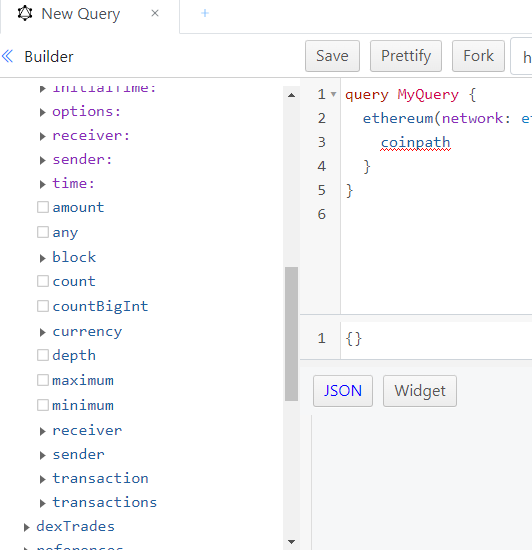
- Create an account and open the GraphQL IDE. The IDE has schema docs, a query builder, and a large library of example queries shared by our team and other users.
- Generate an access token from your account. All API calls authenticate with this token.
- Start from the money-flow examples in the documentation, run them in the IDE, and adjust addresses, chains, and depth to your case.
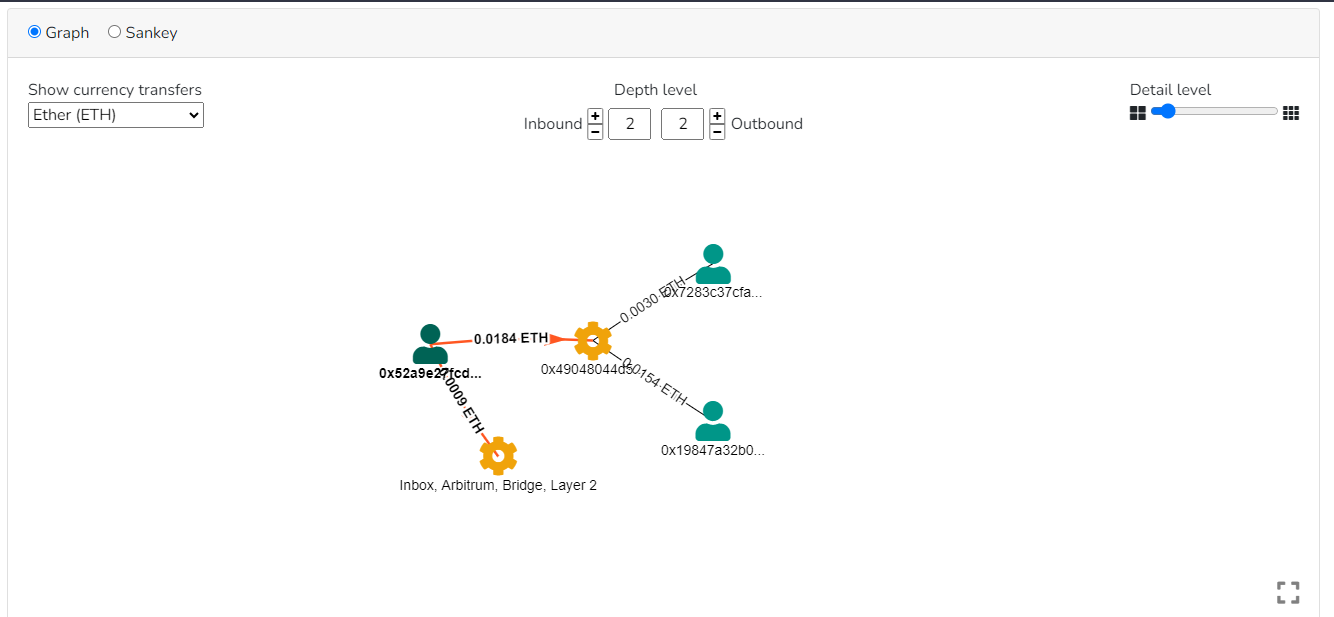
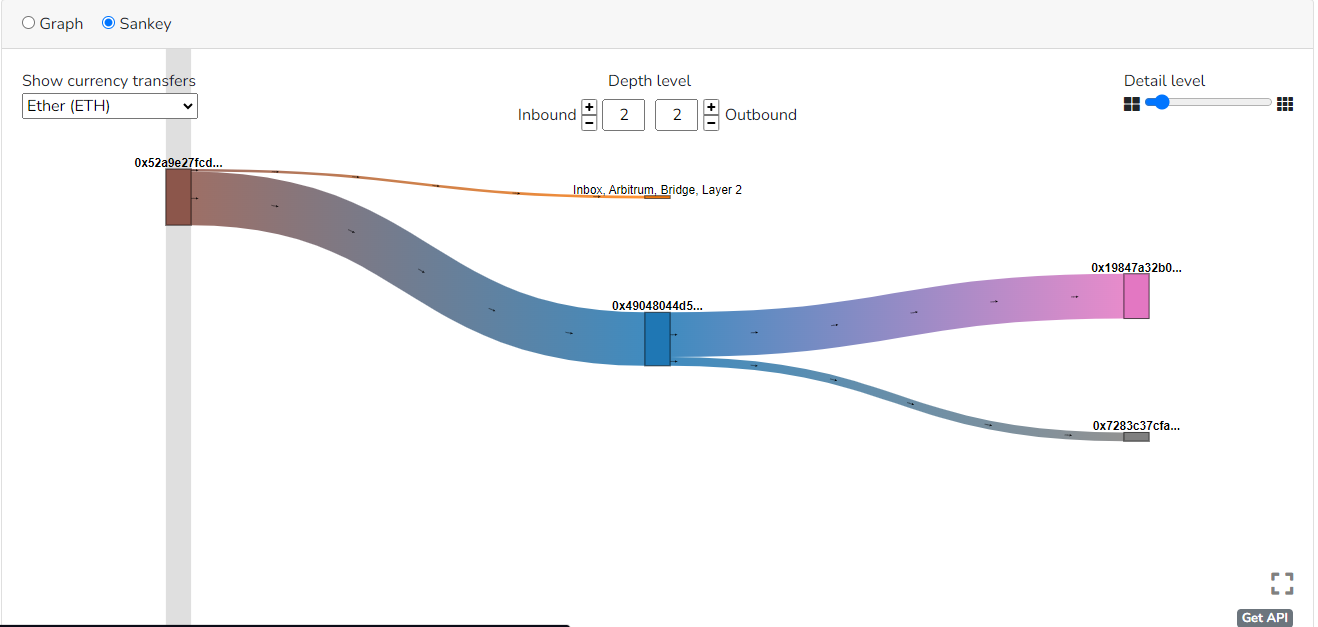
These visualizations show what Coinpath® data can do. You can build any type of tool on the same APIs.
Limitations
Coinpath® APIs tell you about money flow and label counterparties from a pool of 190M+ address labels. Self-service plans don't include ready-made risk scores: sanctions screening, risk scores and exposure are an Enterprise offering. You can also build your own scoring on top of the APIs and labels.
A few things to keep in mind:
Mixers: A mixer (or tumbler) is a service that mixes different streams of potentially identifiable cryptocurrency and outputs potentially unidentified cryptocurrency. Tracing through mixers is an arms race; Coinpath® handles simple cases, and MoneyFlow shows the flow before and after a mixer, but complex cases still need an investigator's judgment.
Centralized services: Funds that enter a centralized exchange can't be traced through it onchain. However, because these services run KYC, they are the most valuable resource in an investigation once you identify the deposit address.
Conclusion
Coinpath® saves a lot of money and time for our clients. We support money-flow data on more than 40 blockchains. By using ready-made data infrastructure you can focus on your application instead of running indexers. If you are building any blockchain data application, reach out to us using this link.
Note: Coinpath® APIs are aimed at companies building end products. If your own funds were stolen, our crypto investigation service takes cases directly.
That's it. If you have any questions, ask us on our Telegram group.
Frequently Asked Questions (FAQs)
- Do you support tracking Mixers and Tumblers?
In simple cases Coinpath® APIs can trace through mixers or tumblers. MoneyFlow shows the flow before and after a mixer, but the hardest cases still need manual analysis.
- Do you have cross-chain tracking?
Yes. MoneyFlow follows funds across chains and stitches a bridge hop into one continuous path.
- How many blockchains do you support?
More than 40. You can check current coverage in the documentation.
- Other than GraphQL, do you have any other interface?
Yes. We offer Kafka and gRPC data streams for real-time pipelines, cloud datashares for bulk data, and an MCP server that lets AI clients like Claude and Cursor query the data in plain English. Enterprise customers can also get direct database access.
- What about pricing, where can I check it?
Pricing is public and starts at $29/mo (billed annually) with a 7-day free trial. See Bitquery pricing. MoneyFlow is priced separately; contact us for a quote.
- Do you have annotations on all blockchains?
Yes. Bitquery's dataset carries more than 190 million address labels across supported chains, covering exchanges, whales, scams, and flagged accounts. These labels surface in MoneyFlow, through the MCP server, and in API results.
- Where can I read more about Coinpath®?
Here's a detailed breakdown of how Coinpath® works.
- What is the best way to contact you?
You can ping us on Telegram.
Updated on 2 October 2026 by the Bitquery team: the yearly price, the address-label count and the product descriptions were checked against Bitquery's billing catalogue, label database and product pages, and AI tools helped redraft the text.
Subscribe to our newsletter
Subscribe and never miss any updates related to our APIs, new developments & latest news etc. Our newsletter is sent once a week on Monday.