Non-fungible Token (NFT) APIs
From Kings of Leon launching an album as an NFT to Grimes and Lindsay Lohan minting themselves on the blockchain, NFTs are…
Back in 2021, when Kings of Leon launched an album as an NFT and Grimes and Lindsay Lohan minted themselves onto the blockchain, NFTs went mainstream. The hype cycle has come and gone, but the data problem stayed: analytics and tooling around NFTs still depend on good access to onchain data. You can access and analyze that data with Bitquery APIs.
Note: We will take CryptoKitties as an example and analyze its CK token (0x06012c8cf97bead5deae237070f9587f8e7a266d), an ERC721 (non-fungible) token where 1 CK token represents 1 kitty. CryptoKitties is a useful example precisely because it has a long history on chain: the same queries work for any NFT collection, current or historical.
All queries below run in the Bitquery IDE against the streaming API endpoint https://streaming.bitquery.io/graphql, authenticated with a Bearer access token. See the NFT API docs for setup and more examples.
Basic NFT Metrics
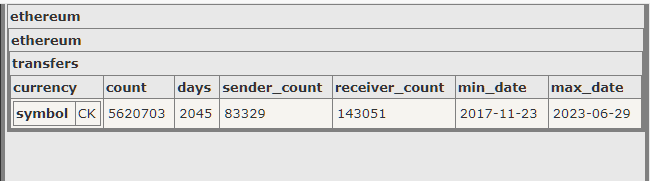
Let's get basic metrics for the CK token: how many transfers happened, and unique sender and receiver counts. The v2 EVM schema exposes NFT transfers alongside fungible transfers, filtered by the token's smart contract:
{
  EVM(network: eth, dataset: combined) {
    Transfers(
      where: {Transfer: {Currency: {SmartContract: {is: "0x06012c8cf97bead5deae237070f9587f8e7a266d"}}}}
    ) {
      count
      senders: count(distinct: Transfer_Sender)
      receivers: count(distinct: Transfer_Receiver)
    }
  }
}
NFT Transfers
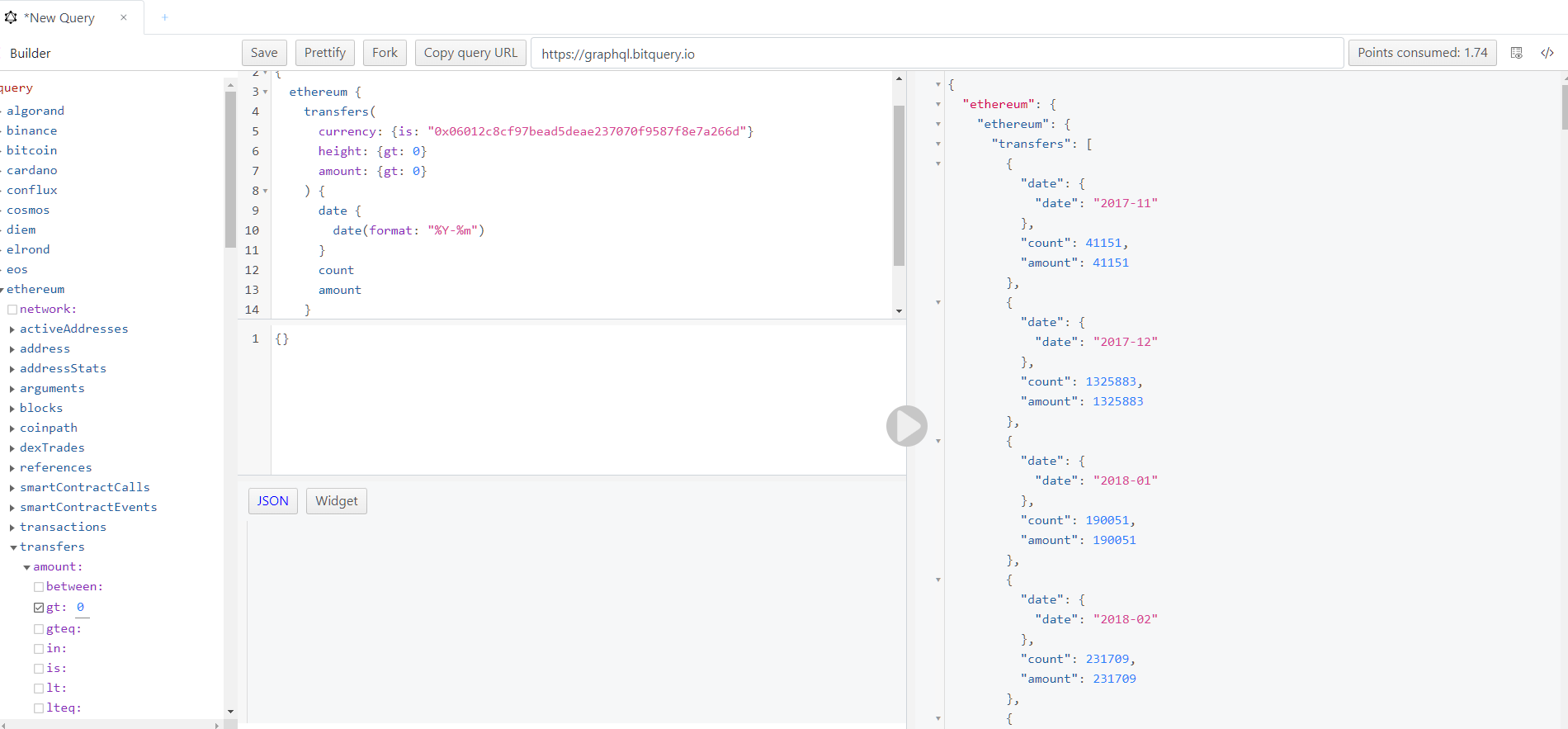
Aggregating transfers by month shows a collection's activity over time. CryptoKitties peaked in the 2017-2018 craze and declined steadily after, which the transfer curve makes obvious.
Token Transfers By Date
NFT Senders and Receivers
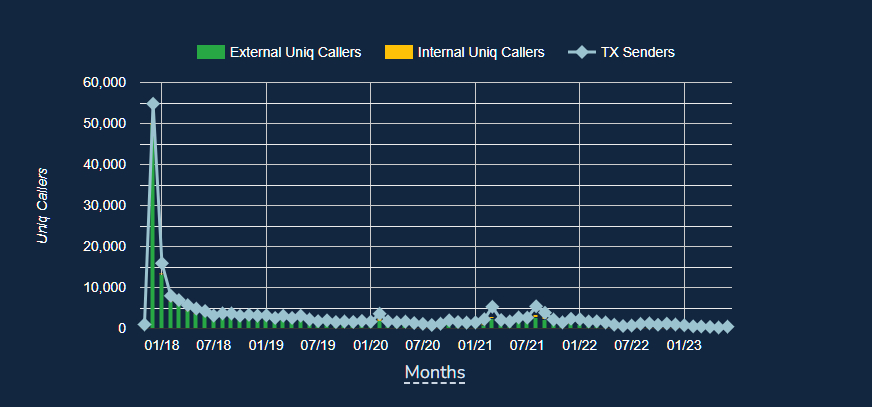
Digging into senders tells you how many distinct wallets are actively moving a collection. By 2021, unique CK senders had fallen to roughly 650 per month from the craze-era peak. You can rank the largest senders and receivers for any collection:
{
  EVM(network: eth, dataset: combined) {
    Transfers(
      where: {Transfer: {Currency: {SmartContract: {is: "0x06012c8cf97bead5deae237070f9587f8e7a266d"}}}}
      orderBy: {descendingByField: "count"}
      limit: {count: 10}
    ) {
      Transfer {
        Sender
      }
      count
    }
  }
}
NFT Smart Contract Stats
Using our APIs, you can get call and transaction stats for any NFT smart contract. In CryptoKitties' case, the contract had accumulated more than 10.3 million smart contract calls and over 7 million transactions from more than 90,000 unique users by early 2021, with a total supply just under 2 million kitties. The same aggregations run live for any collection today.
You can also chart historical activity, for example unique callers over time:
Unique Callers By Date
NFT Smart Contract Methods
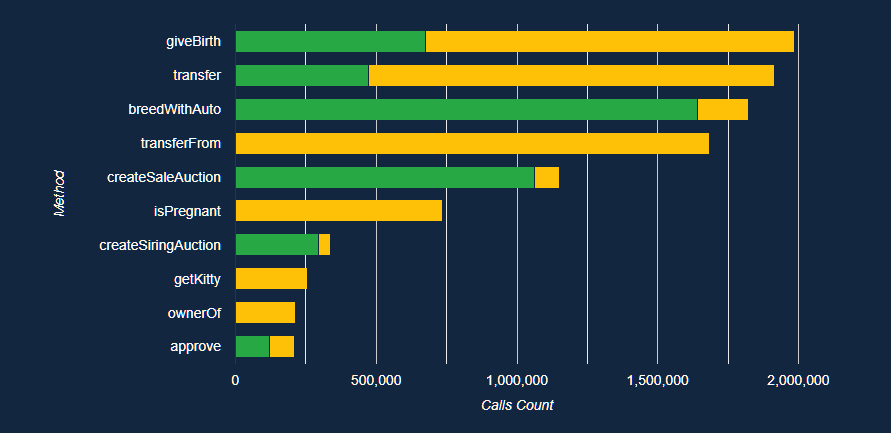
NFTs are created and managed through smart contracts. Using the Calls API, you can see which contract methods get called most and what that says about user behavior. For CryptoKitties, createSaleAuction was called more than a million times, which shows how heavily the auction feature was used. Smart contract events are available the same way through the Events API.
Distribution of Calls Count by Methods
NFT Transactions
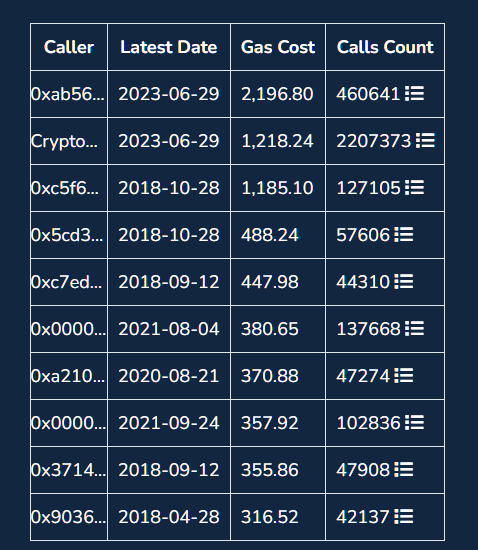
You can get transactions for any NFT asset on Ethereum and other chains, including which addresses spend the most gas on a specific collection. That is useful for market research: the top gas spenders on a competitor's collection are its power users.
NFT Trades on Marketplaces and DEXs
NFT trades are where the market data lives. The v2 schema covers NFT trades across marketplaces through the DEXTrades API, filtered by the NFT as the base currency:
{
  EVM(network: eth, dataset: combined) {
    DEXTrades(
      where: {Trade: {Buy: {Currency: {SmartContract: {is: "0x06012c8cf97bead5deae237070f9587f8e7a266d"}}}}}
      orderBy: {descending: Block_Number}
      limit: {count: 10}
    ) {
      Block {
        Time
        Number
      }
      Trade {
        Dex {
          ProtocolName
        }
        Buy {
          Amount
          Currency {
            Symbol
            SmartContract
          }
        }
        Sell {
          Amount
          Currency {
            Symbol
          }
        }
      }
      Transaction {
        Hash
      }
    }
  }
}
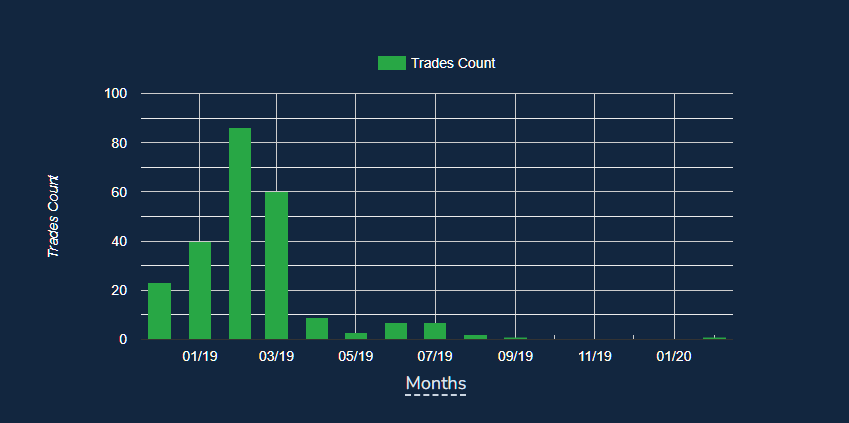
Check the docs for marketplace-specific examples such as OpenSea and Blur trade queries.
Conclusion
NFT projects, marketplaces, and analytics tools all need reliable data access, which Bitquery provides across 40+ chains through simple GraphQL APIs, with real-time subscriptions on its core chains and Kafka streams on Enterprise. If you are building any NFT-related project, talk to us on our Telegram channel.
Also Read:
- Price Index for DEX Tokens
- Bitcoin Analysis: Track bitcoin transactions and address
- Querying Binance Smart Chain (BSC)
- DEX Data APIs: Uniswap trades, prices and OHLC in one query
- The Graph vs Bitquery: Solving Blockchain Data Problems
Updated on 10 October 2026 by the Bitquery team: the 2021 CryptoKitties figures were re-checked against our Ethereum data, a chart shown twice was removed, and streaming is now scoped to our core chains. AI tools helped with the edit.
About Bitquery
Bitquery provides blockchain data for 40+ chains. Our products include:
-
GraphQL APIs and streams: query historical data or subscribe to real-time updates over WebSocket via the IDE and docs.
-
Kafka and gRPC data streams: complete, low-latency onchain data feeds for trading systems and pipelines.
-
MCP server: connect Claude, Cursor, or any MCP client to Bitquery data and query it in plain English.
If you have any questions about our products, ask them on our Telegram channel. Also, subscribe to our newsletter below, we will keep you updated with the latest in the cryptocurrency world.
Subscribe to our newsletter
Subscribe and never miss any updates related to our APIs, new developments & latest news etc. Our newsletter is sent once a week on Monday.